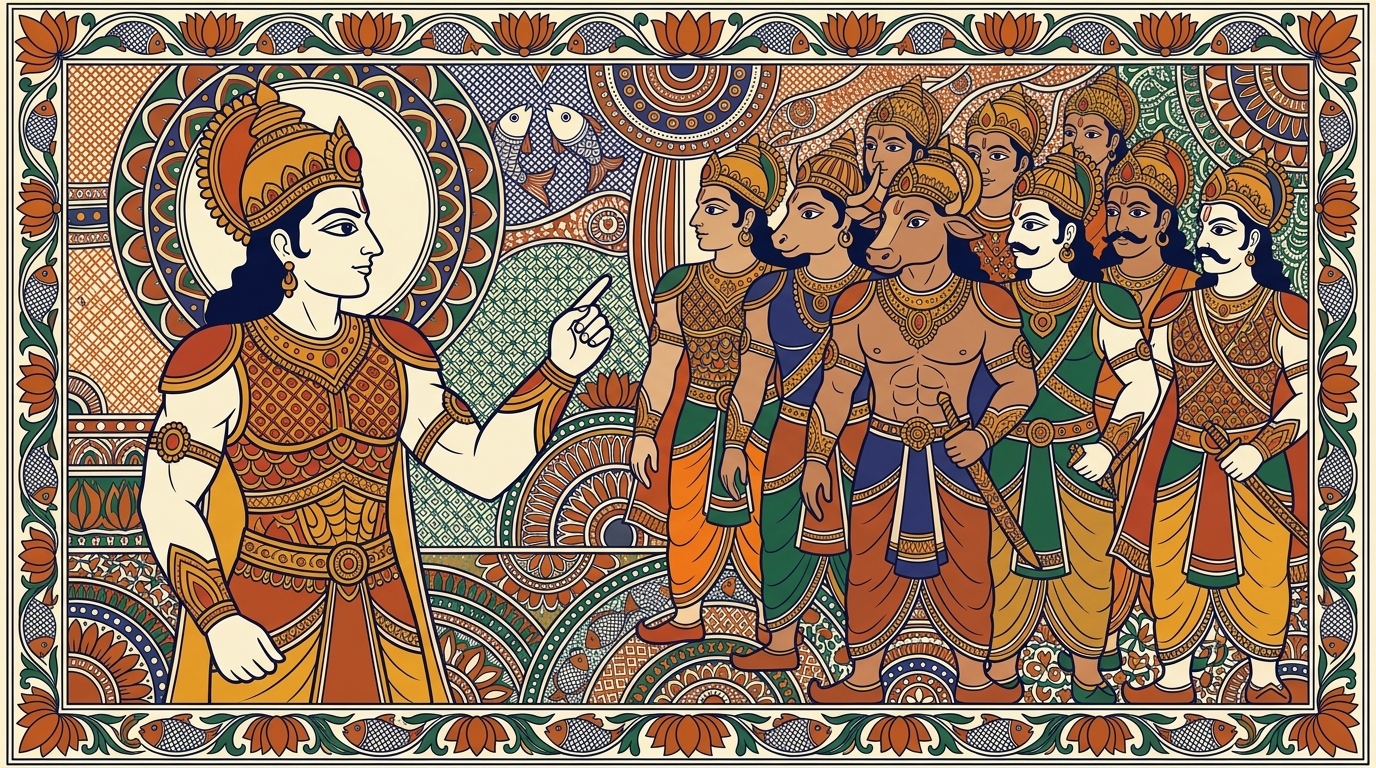
A hawk was chasing a pigeon across a burning sky.
The pigeon, terrified and bleeding from its wing, dove through an open
window and landed in the lap of King Shibi. The bird was shaking so hard
that Shibi could feel its tiny heart hammering against his palm. "Save
me," it cried. "The hawk will tear me apart."
King Shibi wrapped the trembling bird in his silk shawl. "As long as you
are in my kingdom," he said softly, "nothing will harm you. I promise."
But then the hawk landed on the windowsill. Its talons clicked against
the marble. "That pigeon is my food," the hawk said. "I have been
hunting it since dawn. You may be a king, but you cannot steal my dinner.
If you protect the pigeon, I will starve. Is that fair?"
Shibi closed his eyes. The hawk was right: it needed to eat. But he had
given his word to the pigeon. What could he do?
"Take my flesh instead," said the king.
He called for a golden scale. On one side, they placed the pigeon. On
the other, the king began to cut flesh from his own arm. But no matter
how much he cut — his arm, his leg, his side — the pigeon's side of the
scale stayed heavier. Blood pooled on the marble floor. The courtiers
wept. Still the scale did not move.
Finally, Shibi climbed onto the scale himself, offering everything he had.
The hawk and pigeon shimmered and changed shape. They were gods, testing
the king's compassion. They healed his wounds, blessed his name, and
vanished in a shower of golden light.
In this verse, when Duryodhana says "Shaibya," he means a warrior from
King Shibi's family. That single name carries all of this inside it: the
pigeon's terror, the hawk's hunger, the king's blood on the golden scale.
In ancient India, a warrior's name was not just a label. It was a legacy.
Dhrishtaketu meant "bold banner." Purujit meant "conqueror of many."
Every name on that battlefield told a story of who came before.