Skip to content
Before You Begin

ध्यानश्लोक

Dhyanashloka

Nine meditation verses traditionally recited before studying the Bhagavad Gita. They quiet the mind and turn it toward the divine.

Dhyanashloka — meditation before studying the Gita

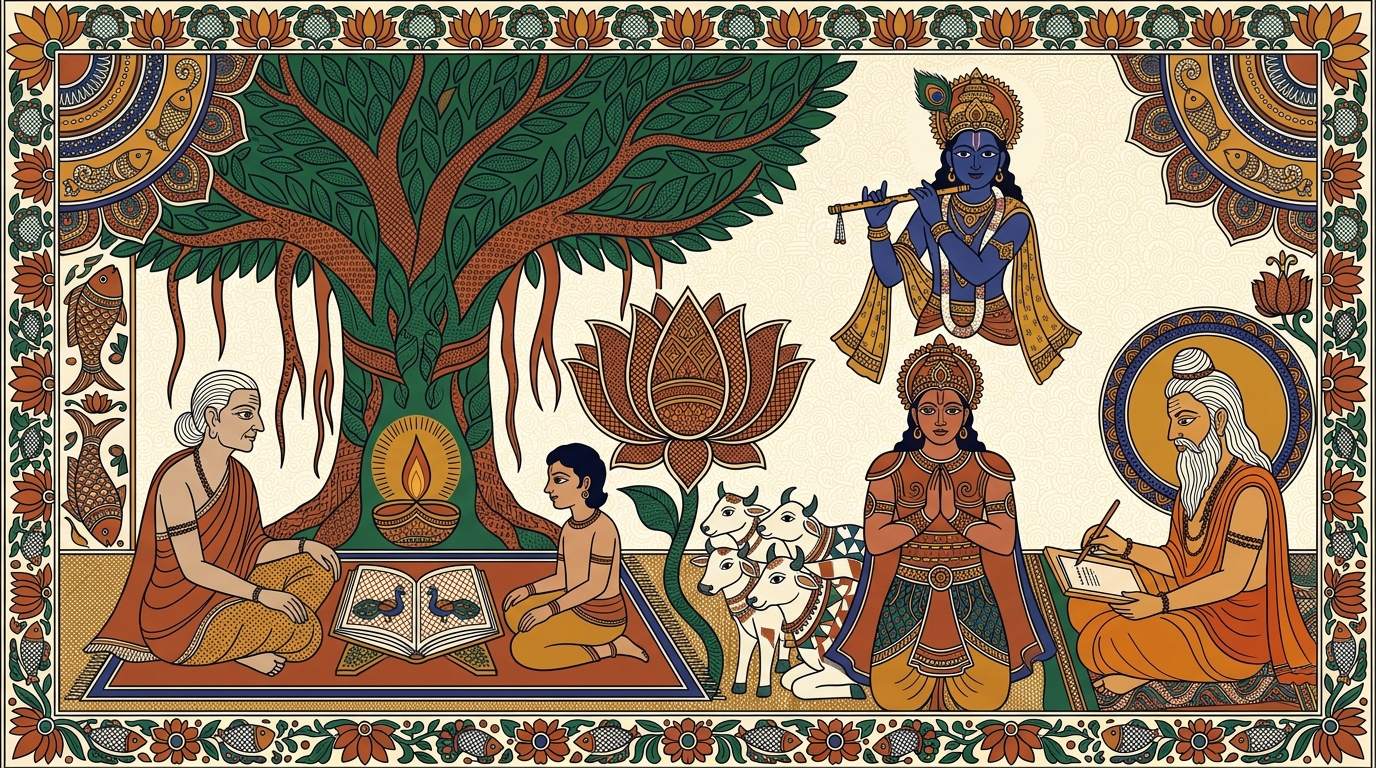
Before every reading of the Gita, it is traditional to recite these nine dhyanashlokas — verses of meditation. They were composed by the great scholar Madhusudhan Saraswati, who lived about 500 years ago.

These verses are like tuning an instrument before playing music. They help us set aside distractions, remember the teachers who passed this wisdom down to us, and open our hearts to receive the teachings of the Gita.

1

ॐ पार्थाय प्रतिबोधितां भगवता नारायणेन स्वयं व्यासेन ग्रथितां पुराणमुनिना मध्ये महाभारतम् । अद्वैतामृतवर्षिणीं भगवतीम् अष्टादशाध्यायिनीं अम्ब त्वामनुसन्दधामि भगवद्गीते भवद्वेषिणीम् ॥

Om Paarthaaya pratibodhitaam Bhagavataa Naaraayannena swayam Vyaasena grathitaam puraanamuninaa madhye Mahaabhaaratam, Advaitaamritavarshineem Bhagavateem ashtaadashaadhyaayineem Amba twaam anusandadhaami Bhagavad-Geete bhavadweshineem.

O Bhagavad Gita, you were taught by Lord Narayana himself to Arjuna, and woven into the great Mahabharata by the ancient sage Vyasa. You shower the nectar of oneness across your eighteen chapters. O Divine Mother, destroyer of the cycle of birth and death — I meditate upon you.

2

नमोऽस्तु ते व्यास विशालबुद्धे फुल्लारविन्दायतपत्रनेत्र । येन त्वया भारततैलपूर्णः प्रज्वालितो ज्ञानमयः प्रदीपः ॥

Namo'stu te Vyaasa vishaalabuddhe phullaaravindaayatapatranetra, yena twayaa Bhaarata-taila-poornah prajwaalito jnaanamayah pradeepah.

I bow to you, O Vyasa, whose mind is vast as the sky and whose eyes are wide like the petals of a blooming lotus. You lit the lamp of wisdom, filling it with the oil of the Mahabharata.

3

प्रपन्नपारिजाताय तोत्रवेत्रैकपाणये । ज्ञानमुद्राय कृष्णाय गीतामृतदुहे नमः ॥

Prapanna-paarijaataaya totra-vetraika-paanaye, jnaana-mudraaya Krishnaaya Geetaamrita-duhe namah.

I bow to Krishna — the wish-fulfilling tree for those who seek refuge in him, who holds a herding stick in one hand and makes the gesture of wisdom with the other, and who milks the nectar of the Gita for all.

4

सर्वोपनिषदो गावो दोग्धा गोपालनन्दनः । पार्थो वत्सः सुधीर्भोक्ता दुग्धं गीतामृतं महत् ॥

Sarvopanishado gaavo dogdhaa Gopaala-nandanah, Paartho vatsah sudheer bhoktaa dugdham Geetaamritam mahat.

All the Upanishads are the cows, and Krishna the cowherd is the milker. Arjuna is the calf, and the wise are those who drink the milk. The Gita itself is the wonderful, nourishing milk.

5

वसुदेवसुतं देवं कंसचाणूरमर्दनम् । देवकीपरमानन्दं कृष्णं वन्दे जगद्गुरुम् ॥

Vasudeva-sutam devam Kamsa-Chaanoora-mardanam, Devakee-paramaanandam Krishnam vande Jagad-gurum.

I salute Lord Krishna — the son of Vasudeva, the divine being who defeated the tyrants Kamsa and Chanura, the supreme joy of his mother Devaki, and the teacher of the entire world.

6

भीष्मद्रोणतटा जयद्रथजला गान्धारनीलोत्पला शल्यग्राहवती कृपेण वहनी कर्णेन वेलाकुला । अश्वत्थामविकर्णघोरमकरा दुर्योधनावर्तिनी सोत्तीर्णा खलु पाण्डवै रणनदी कैवर्तकः केशवः ॥

Bheeshma-Drona-tataa Jayadratha-jalaa Gaandhaara-neelotpalaa Shalya-graahavati Kripena vahanee Karnena velaakulaa, Ashwatthama-Vikarna-ghora-makaraa Duryodhana-aavartinee Sotteernaa Khalu Paandavai rana-nadee Kaivartakah Keshavah.

The battle of Kurukshetra was like a terrible river. Bhishma and Drona were its banks. Jayadratha was its water, and the King of Gandhara its blue lotus. Shalya was the shark, Kripa the current, Karna the crashing waves. Ashwatthama and Vikarna were its sea monsters, and Duryodhana the whirlpool. The Pandavas crossed this river — with Krishna as their boatman.

7

पाराशर्यवचस्सरोजममलं गीतार्थगन्धोत्कटम् नानाख्यानककेसरं हरिकथासम्बोधनाबोधितम् । लोके सज्जनषट्पदैरहरहः पेपीयमानं मुदा भूयाद्भारतपङ्कजं कलिमलप्रध्वंसिनः श्रेयसे ॥

Paaraasharya-vachas-sarojam-amalam Geetaartha-gandhotkattam naanaa-aakhyaanaka-kesaram Harikathaa-sambodhana-abodhitam, loke sajjana-shatpadaih aharahah pepeeyamaanam mudaa bhooyaat Bhaarata-pankajam kalimala-pradhwamsinah shreyase.

The Mahabharata is like a great lotus flower. Born from Vyasa (son of Parashara), it is pure and spotless. The fragrance of the Gita fills it. Its many stories are the petals, and the tales of Lord Hari make it bloom. Good people, like bees, drink its nectar joyfully every day. May this lotus destroy the darkness of our age and bring us good fortune.

8

मूकं करोति वाचालं पङ्गुं लङ्घयते गिरिम् । यत्कृपा तमहं वन्दे परमानन्दमाधवम् ॥

Mookam karoti vaachalam pangum langhayate girim, yat-kripaa tam-aham vande Paramaananda-Maadhavam.

By whose grace even the mute can speak eloquently, and the lame can leap over mountains — I bow to that Lord Madhava, who is supreme bliss.

9

यं ब्रह्मा वरुणेन्द्ररुद्रमरुतः स्तुन्वन्ति दिव्यैः स्तवैः वेदैः साङ्गपदक्रमोपनिषदैर्गायन्ति यं सामगाः । ध्यानावस्थिततद्गतेन मनसा पश्यन्ति यं योगिनः यस्यान्तं न विदुः सुरासुरगणा देवाय तस्मै नमः ॥

Yam Brahmaa Varunendra-Rudra-marutah stunvanti divyaih stavaih Vedaih saanga-pada-kramopanishadaih gaayanti yam Saamagaah, dhyaana-avasthita-tadgatena manasaa pashyanti yam Yoginah yasyaantam na viduh sura-asura-ganaah Devaaya tasmai namah.

Brahma, Varuna, Indra, Rudra, and the wind gods praise Him with divine hymns. The singers of the Sama Veda chant His glory through the Vedas and Upanishads. Yogis see Him through minds absorbed in deep meditation. Even the gods and demons cannot find His end. To that radiant God, I bow.

॥ इति ध्यानश्लोकाः ॥

Now, with a quiet mind, begin the Gita.

Begin Chapter 1 →