The score was 47 to 3, and Kabir's team was losing badly.
Kabir was captain of the under-12 Jodhpur district kabaddi team. They
had trained for three months, waking at five every morning to practice
raids in the freezing sand. His mother packed extra parathas for the
bus ride to every tournament. But the team from Jaipur was faster,
stronger, and their coach had once played for India.
During the break, Kabir's teammates sat on the dusty ground with their
heads down. Rahul was picking at the tape on his knee. Sania stared at
nothing, her hands limp in her lap. Nobody spoke. The only sound was
the Jaipur team laughing on the other side of the court.
Kabir's stomach was churning. He wanted to sit down too. He wanted to
disappear. But he was the captain, and captains don't get to disappear.
He stood up. His legs felt heavy, but he stood.
"Okay, listen," he said, surprised by the steadiness of his own voice.
"Rahul — remember that spin raid you did last week in practice? The one
where even Coach couldn't catch you? Nobody on that team has seen it.
Sania — you haven't missed a single ankle hold all morning. Not one."
He went around the circle, naming each player, naming something real
they had done. Not flattery. Facts.
He didn't feel as confident as he sounded. But something strange
happened: as he named his teammates' strengths out loud, he started
to believe his own words. And one by one, heads came up.
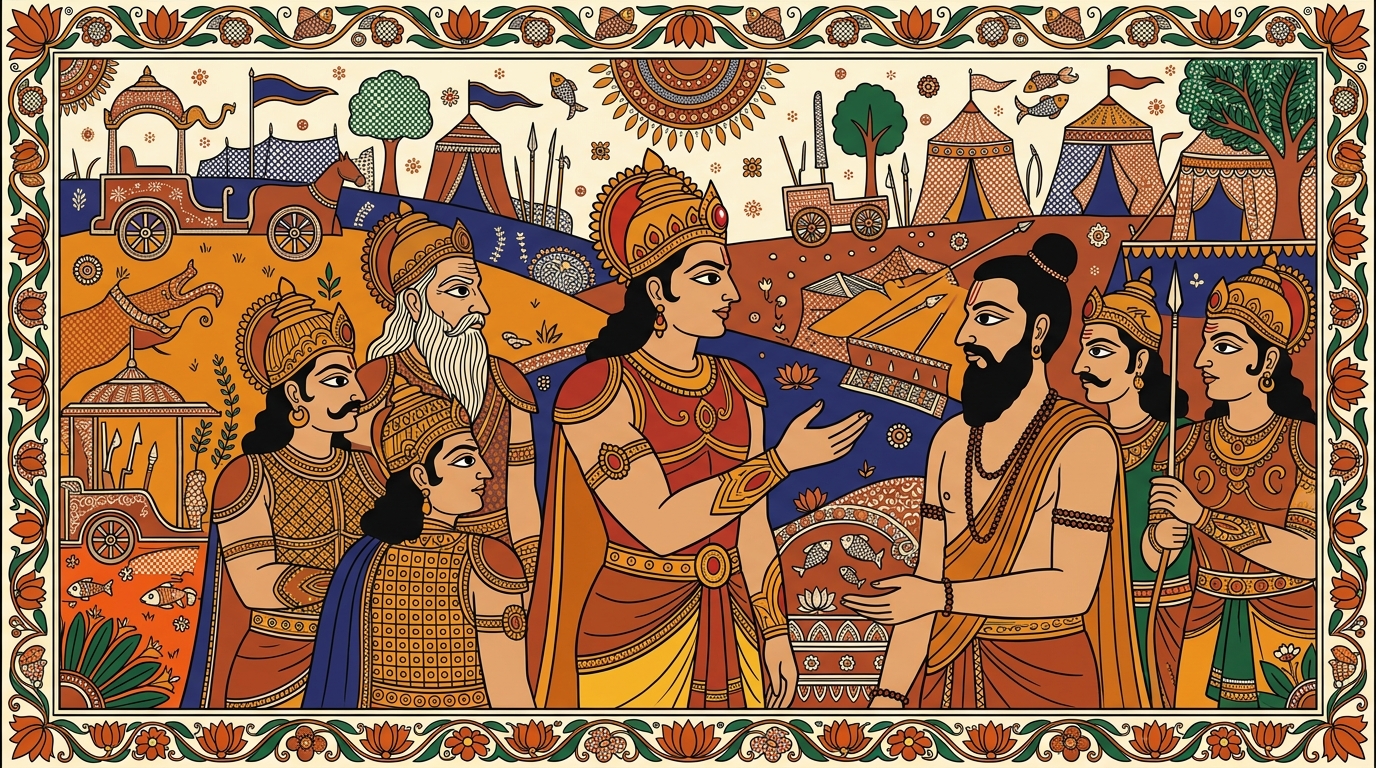
That is exactly what Duryodhana does in verse 7. After five straight
verses of nervously listing every dangerous warrior on the Pandava
side, he catches himself. He turns to Drona and says: "Enough about
them. Let me name our champions."
But listen to how he addresses Drona — "dvijottama," best of the
twice-born. It sounds respectful. Underneath, Duryodhana is really
saying: "You are on OUR side. Right? Right?"
Sometimes the huddle isn't just for the team. Sometimes it's for the
captain who needs to hear himself say it will be okay.