Everyone in Class 8C knew that Pallavi was cheating.
Not suspected. Not wondered. Knew. They had seen her phone tucked
under her answer sheet during the maths exam, the screen tilted at
just the right angle to show the formula sheet she had photographed
the night before. They had seen her eyes flick down and to the left
every few minutes — down to the phone, left to make sure the teacher
was not looking. She was not even subtle about it.
But nobody said a word.
The reason was simple: Pallavi's father was the president of the
school's parent-teacher association. He had donated the new computer
lab. He had funded the school bus that ran the route to Dwarka. When
Pallavi's name appeared at the top of the marks list every term,
the principal smiled and the teachers nodded and the school's
reputation climbed one more rung on the district rankings. Everyone
benefited. So everyone looked the other way.
Everyone except Kavya.
Kavya sat two rows behind Pallavi. She had seen the phone. She had
seen the formula sheet. She had watched as Pallavi finished the exam
in forty minutes while everyone else struggled for the full ninety.
And something inside Kavya, something stubborn and hot and
impossible to ignore, would not let her pretend she had not seen.
She told her best friend Sana first. Sana shook her head. "Don't
get involved. Her father will make your life miserable."
She told her older sister. Her sister said, "Think about your own
future. Is this your fight?"
She went to Deepak, the class monitor, who was supposed to report
exactly this kind of thing. Deepak laughed — not a mean laugh, but
a tired one. "Kavya, everyone knows. Nobody cares. If you report
her, you'll be the one people get angry at, not her."
Kavya walked home that afternoon along the canal path, kicking
stones into the green water. She thought about what Deepak had said.
He was right. Everyone knew. And because everyone knew and nobody
acted, the knowing had become a kind of agreement. A shared
blindness. If everyone closes their eyes at the same time, then
nobody is responsible for what happens in the dark.
But Kavya's eyes were open. And that was the problem. Once you see
something wrong, you cannot unsee it. The knowledge sits inside you
like a splinter — small enough to ignore for a while, but always
there, always sharp, always pressing against the soft part of your
conscience.
She did not report Pallavi. Not because she was afraid — though she
was — but because she had not yet figured out the right way to do
it. What she did do, that night, sitting at her desk with her chin
resting on her folded arms, was make a decision: she would not close
her eyes. Whatever happened, however lonely it became, she would
keep seeing what she saw. Because the worst kind of blindness is
not the kind you are born with. It is the kind you choose.
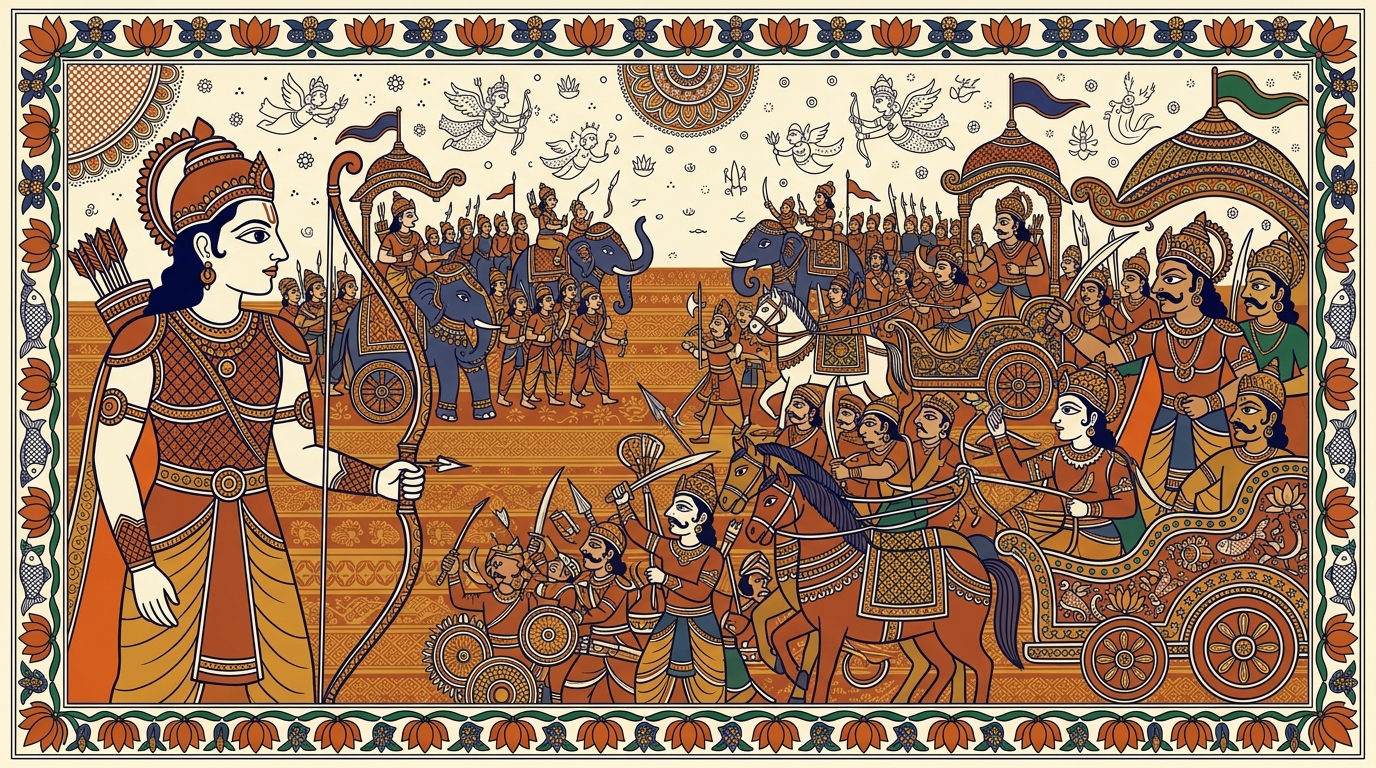
Arjuna says: even if their minds are blinded by greed, even if they
cannot see the crime in what they are doing — I can see it. And
seeing is its own burden. The Kauravas have convinced themselves
that destroying their own family is acceptable. But Arjuna refuses
to share in that blindness. His eyes are open, and what he sees is
breaking his heart.