On the morning of September 15th, Vivaan found a note on the kitchen
table.
It was from his mother, written on the back of a grocery receipt in
her neat, slanting handwriting: "Your father and I are going to the
lawyer today. We'll explain everything tonight. Be brave, beta. I love
you."
He read it three times. His Frosted Flakes went soggy in the bowl.
That evening, they sat him down in the living room — his mother on
the blue sofa, his father in the armchair by the window, three feet
and an ocean apart. They explained, gently, that they would be living
in separate houses. They said it had nothing to do with him. They
said they both loved him very much.
And then they asked him to choose weekends.
"Your father will have Saturday," his mother said.
"And your mother will have Sunday," his father said.
They both looked at him. Waiting.
Vivaan stared at the carpet. It was a red Kashmiri carpet his
grandmother had given them when they moved into this house. He knew
every swirl in its pattern. He wanted to shrink down and disappear
into those swirls.
Then his phone buzzed in his pocket. A voice note from his
grandmother: "Vivaan beta, I made gajar ka halwa. Come Thursday?"
Just like that — as if Thursday still existed, as if the world still
had halwa in it. He did not answer right away, but he put his hand
on the carpet and felt the wool, solid and warm under his palm. He
did not have to choose. Not tonight. He just had to still be here.
How do you choose between the person who taught you to ride a bicycle
and the person who sat up all night when you had a fever? How do you
pick a side when both sides made you?
That is the raw nerve Arjuna touches in verse 4. Krishna has just told
him to stand up and fight. And Arjuna fires back, not with defiance,
but with a genuine, heartbroken question: "How?"
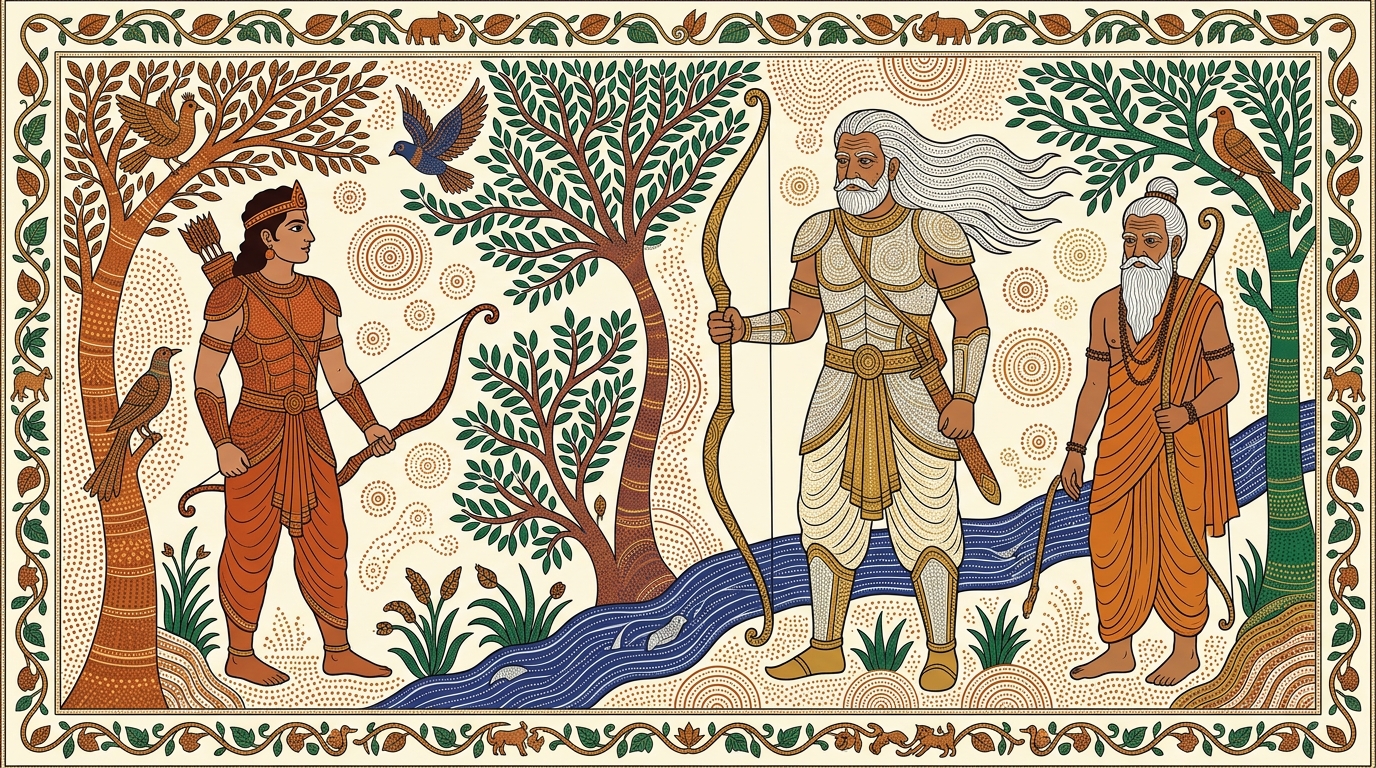
How can I shoot arrows at Bhishma? Bhishma, who gave up his own right
to the throne so the family could survive. Who never married, never
had children, because he made a vow to protect us. Bhishma, who used
to carry me on his shoulders when I was small.
How can I shoot arrows at Drona? Drona, who placed the bow in my
hands for the first time. Who spent years teaching me to aim, to
breathe, to release. Everything I am as a warrior, he made me.
Arjuna calls them "puja-arhau," worthy of worship. Not just
respect. Worship. These are not enemies to him. They are temples.
And Krishna is asking him to bring weapons into a temple.
The word "katham," how, is not a rhetorical flourish. It is a
genuine cry. Arjuna is not being dramatic. He is asking the most
honest question a person can ask when duty and love pull in opposite
directions: How do I do this without breaking something that cannot
be repaired?