From where Arjuna sat in the chariot, he could see everything.
To his left, the Pandava army stretched like a dark river, thousands
of soldiers who had left their families and farms to fight for him,
who believed in his cause, who were counting on his arrows to fly
true. Their banners snapped in the dry wind. Their horses pawed
the dust. They were ready.
To his right, the Kaurava army stood in perfect formation. And there,
at the front, gleaming in the morning light, was the silver armor of
Bhishma, grandfather Bhishma, who had held Arjuna on his knee as
a child and told him stories about the stars. Beside Bhishma stood
Drona, calm as a temple pond, the man who had placed the first bow
in Arjuna's small hands and said, "You are born for this." Drona,
who had made Arjuna practice until his fingers bled, then wrapped
those fingers himself with clean cloth and said, "Tomorrow, again."
Arjuna's mind spun like a wheel stuck between two ruts.
If we win, he thought, then Bhishma will fall. His silver armor will
be dented and still. Drona's calm eyes will close forever. And I will
stand on a field of victory that is also a graveyard of everyone who
ever loved me. What kingdom is worth that? What throne can I sit on
without seeing their faces?
But if we lose, then everything my brothers have suffered, every
year of exile in the forest, every humiliation Draupadi endured,
every promise broken by the Kauravas — all of it will have been
for nothing. Yudhishthira's patience, wasted. Bhima's rage, wasted.
My own vows, smoke in the wind.
Win, and the people I love are dead. Lose, and the people I love
have suffered for nothing.
Arjuna looked at Krishna, hoping his friend would offer some third
path, some clever escape from this impossible choice. But Krishna
only held the reins and waited. The white horses stood still. A
crow cried somewhere overhead, circling.
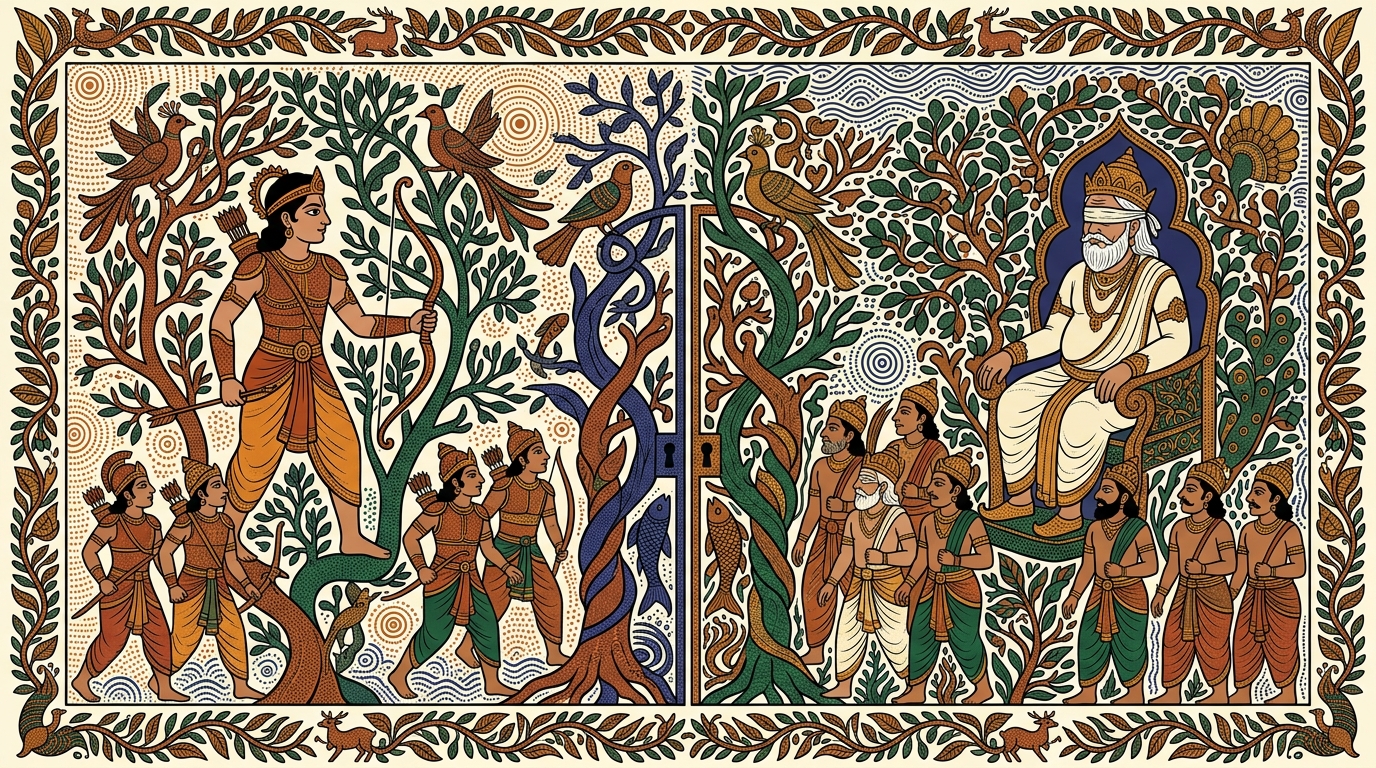
This is the paralysis that comes when every road leads to pain.
Not laziness. Not cowardice. The honest recognition that some
choices do not have a clean answer — that sometimes both doors are
locked, and the key to one is the cost of the other.
Arjuna was not a fool. He was a man staring at two futures, and in
neither one could he find a place to stand without his heart breaking.