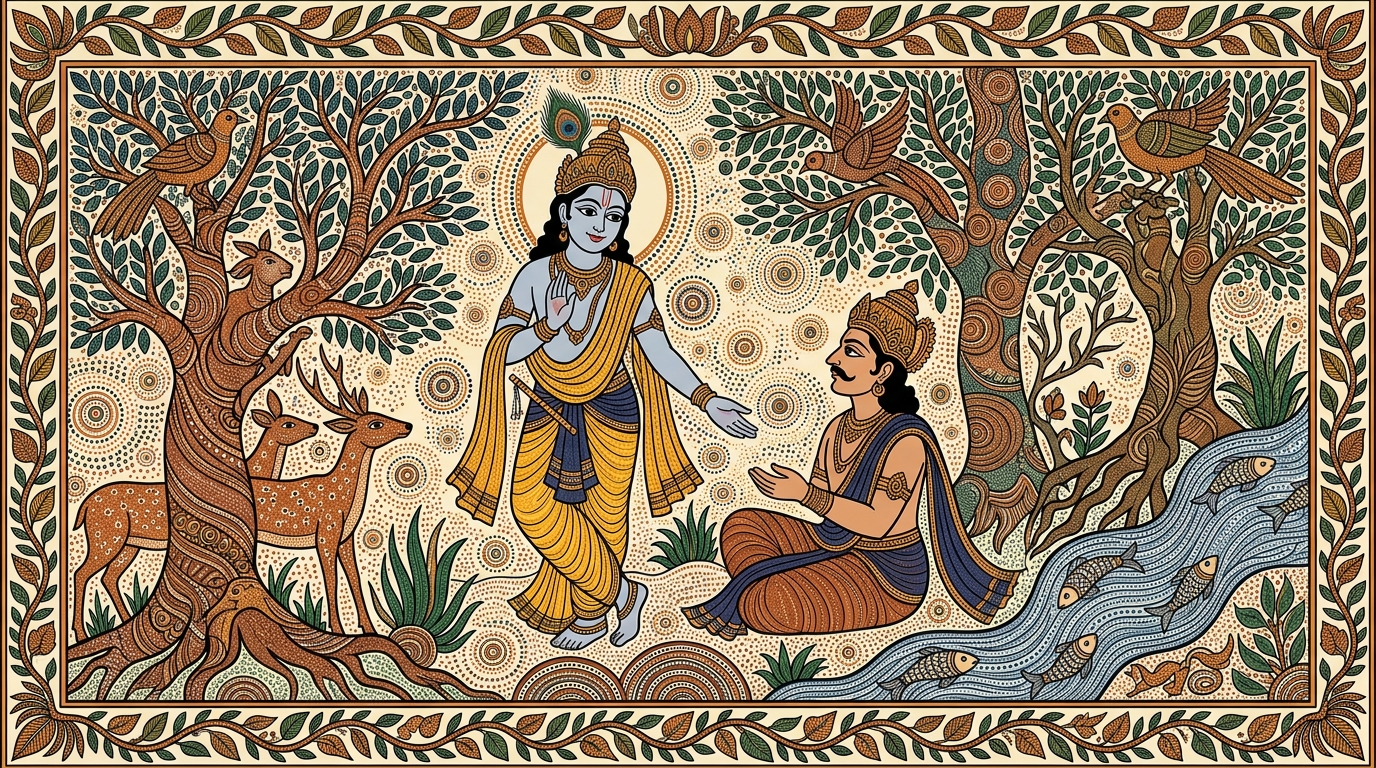
Krishna's voice went quiet, but the quiet was not gentle. It was
the quiet of a knife being laid on a table.
"Let me tell you what will happen," he said, "if you put down
your bow and walk away."
Arjuna's fingers twitched on Gandiva's string.
"Tomorrow, the bards will sing about this battle. They will sing
about it for a thousand years. Every warrior who fought here will
be named — their courage measured, their deeds weighed. And in
those songs, there will be a verse about the greatest archer in
the world who came to the battlefield, looked at the enemy, and
turned his chariot around."
Krishna paused, letting the image land.
"They will not say you were wise. They will not say you were
compassionate. They will say you were afraid. That is what the
songs will carry. Not your reasons — your retreat. And the word
they will use for cowardice will be your name."
Arjuna's face drained of color. He had not thought of this. In
the fog of his grief, he had been looking only at the men in
front of him — the uncles, the teachers, the cousins — and seeing
their deaths. He had not turned around to see what his withdrawal
would look like from behind: the greatest warrior of his age,
walking away.
"You have been honored, Arjuna," Krishna said. "Kings have bowed
to you. Children in villages you have never visited know your
name. Drona himself said you were his finest student. That kind
of honor does not belong to you alone. It belongs to everyone who
ever believed in you, every soldier who drew courage from knowing
Arjuna was on their side."
He leaned closer. "You built something, Arjuna. Year by year,
arrow by arrow, you built a name that means something, not only
to you but to every soldier on this field who stands a little
taller because you are here. That is not vanity. That is a life's
work."
The wind died. The banners hung limp. Even the air seemed to hold
its breath.
Arjuna felt the words land — not as shame, but as recognition.
Like turning around and seeing, for the first time, the full
length of the road he had walked to reach this place. He thought
of the years of practice at dawn, the calluses on his fingers, the
promises he had made to his brothers. All of it real. All of it
still his.
His hand tightened on Gandiva — not in panic, but in the quiet
grip of a man remembering what he held.