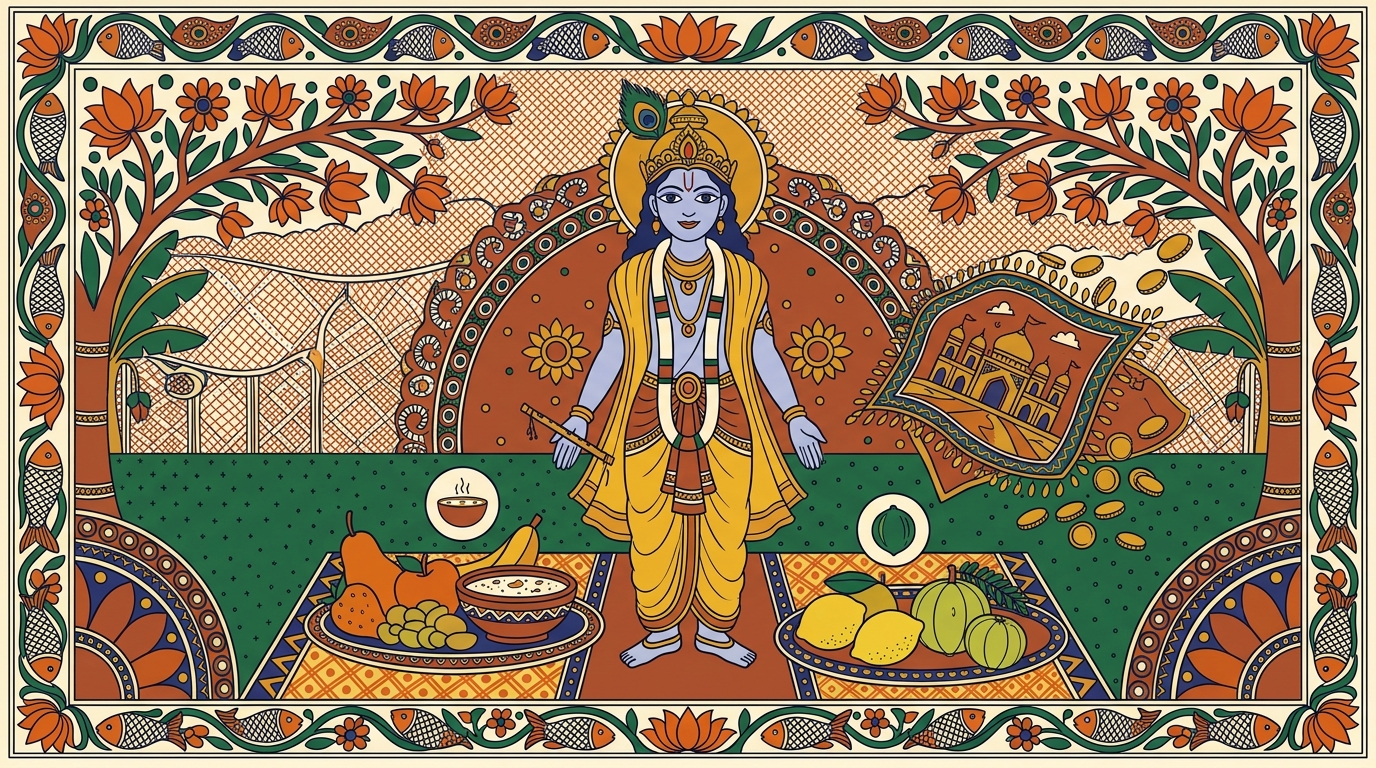
Beneath an old banyan tree at the edge of the great forest lived a hermit so
quiet that the deer grazed beside him and the birds nested in the folds of
his cloak. Travellers on the forest road had heard of him, and as they passed
they liked to test the strange calm in his eyes.
One bright noon a wealthy merchant came down the road, his cart heavy with
treasure. He had heard that nothing could move the hermit, and he meant to
prove it false. He stopped his cart, opened a chest, and poured a glittering
river of gold coins onto the ground at the hermit's feet.
"All of it," said the merchant grandly, "is yours. A palace. Servants. Silk.
You need only ask, and I will make you the richest sage in the kingdom."
The hermit looked at the gold the way you might look at fallen leaves —
seeing it clearly, finding it pretty enough, wanting none of it. "You are
kind," he said simply. "But I have nowhere in me to put it." The merchant
waited for greed to flicker in his face. None came. Puzzled, he gathered his
coins and rolled away.
That very evening a band of rough men came down the same road. They had heard
only that a fool sat under the banyan, and they wanted sport. They stood over
the hermit and hurled insults at him — called him lazy, useless, a beggar, a
waste of good shade. They spat words sharp enough to wound any man's pride.
The hermit listened the way he might listen to crows quarrelling overhead. He
did not flinch. He did not argue. He did not even frown. When at last the men
ran out of insults, they found him exactly as calm as when they began, and,
strangely uneasy, they slunk away into the dusk.
A young woodcutter who had watched both scenes from behind a tree crept out.
"Sir," he whispered, "the gold did not pull you toward it, and the insults
did not push you away. How?"
The hermit smiled. "Because I am not reaching for anything the world offers,
nor running from anything it throws. When you stop clinging to the sweet and
flinching from the sour, the world may pour gold at your feet or curses at
your head, and you stand just where you are. That standing-steady is the
whole of it."