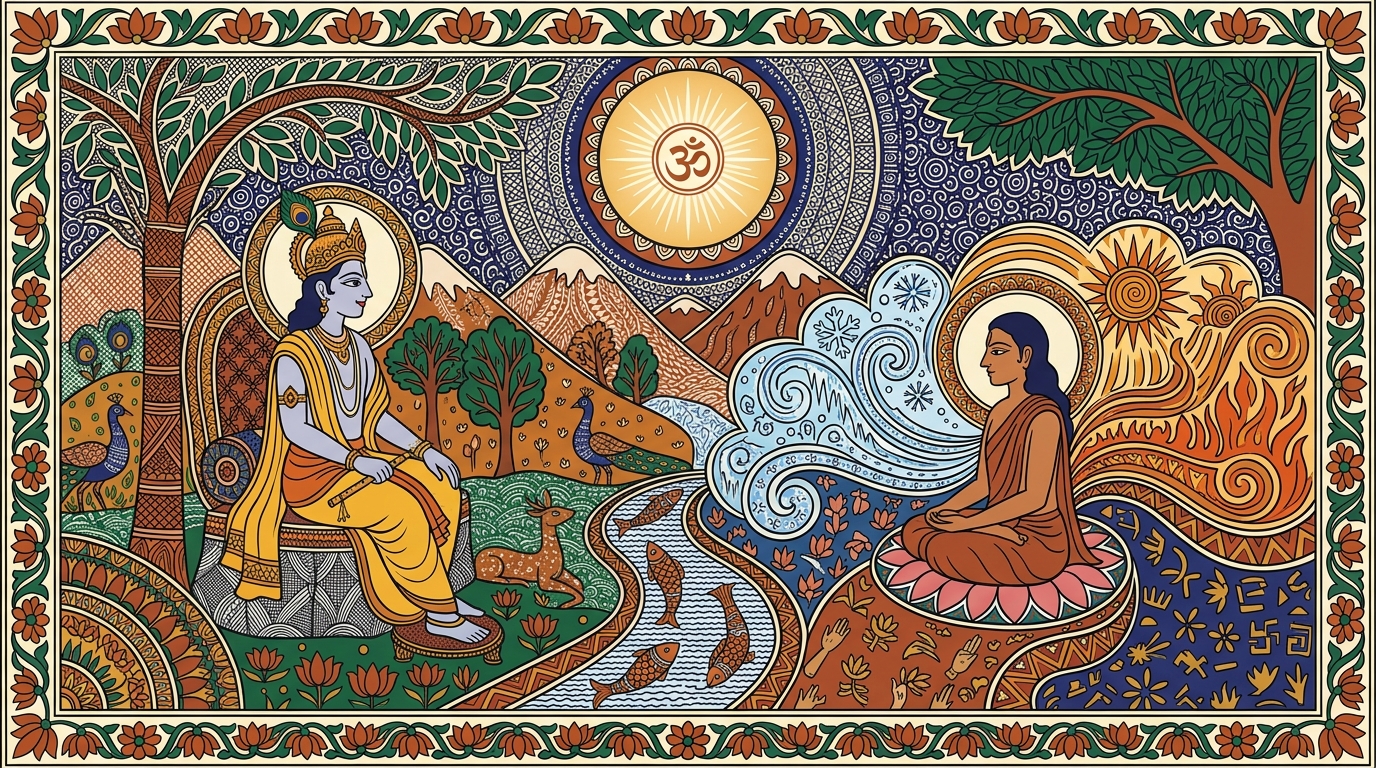
On a narrow ledge high in the Himalayas, where the snow never fully melted,
a tapasvi named Dhruva-deva sat down to meditate one evening. He folded his
legs, straightened his spine, closed his eyes, and went still as the rock
beneath him.
As the sun slipped behind the white peaks, the cold came down hard. A
needle-sharp wind rolled off the glaciers and bit at his bare shoulders.
Frost gathered on his eyebrows and beard. Any traveller would have been
driven to shelter, shivering and miserable. But the tapasvi did not stir.
Inside him a quiet so deep had settled that the cold reached his skin and
went no further. It could not reach the calm.
The long mountain night passed. Stars wheeled overhead. An owl called once
and was silent. Somewhere below, a rockslide rumbled and faded. Hour after
hour the tapasvi sat unmoved, neither suffering the cold nor wishing it away,
simply resting in the still bright Self within.
Then, at last, the first grey light touched the eastern peaks. The sun rose
over the snow and poured its warmth down the mountainside. The frost on the
tapasvi's beard began to melt and run in little bright drops. Pleasant warmth
spread across the same shoulders the cold had gripped all night.
And here was the wonder: the tapasvi was exactly the same at dawn as he had
been at dusk. The biting cold had not made him miserable, and now the lovely
warmth did not make him giddy with delight. He had not been waiting for the
sun, the way the rest of us wait, counting the hours till comfort comes. Cold
or warm, dark or bright — the calm in him never tilted.
A young goatherd, climbing past with his flock, saw the still figure and the
melting frost and stopped, amazed.
"Holy one," he said, "the whole freezing night and you did not shiver. The
warm dawn comes and you do not even smile with relief. How can the same man
sit unchanged through cold and heat?"
The tapasvi opened his eyes, and they were as quiet as the mountain pools.
"When a man has made friends with his own mind," he said, "the highest Self
sits steady inside him like a lamp behind glass. Cold and heat blow against
the glass. Pleasure and pain, praise and blame, blow against it too. But the
flame within does not flicker. That steadiness is what I came up the mountain
to find."