The first punch came from behind.
Vikram did not see it. He was walking home from school along the
narrow lane behind the market in Varanasi, the one that smelled of
ripe guavas and diesel from the generator that the cloth shop ran
every afternoon during the power cuts. His backpack was heavy with
textbooks and his water bottle was empty and he was thinking about
nothing in particular when a fist connected with the side of his
head and the world tilted sideways.
He stumbled into the wall. His glasses flew off and skittered across
the gutter. When he turned around, blinking, the world blurry without
his lenses, he saw a shape he knew as well as his own reflection.
Rohit. His older brother.
Rohit was sixteen and angry. He had been angry for a year now, ever
since their parents' divorce, ever since he chose to live with their
father and Vikram chose to stay with their mother. The anger had
started as silence — weeks without phone calls, messages left on
read. Then it turned to words — sharp, mean words about Vikram being
a "mama's boy," about choosing sides, about betrayal. And now, on
this Tuesday afternoon in the lane behind the market, the words had
turned to fists.
"Fight me," Rohit said. His voice cracked the way it always did when
he was trying to sound tough. "Come on. Fight me."
Vikram looked at his brother through the blur. He could see enough
to notice that Rohit's eyes were red. Not from anger. From crying.
The kind of crying you do alone in your room at night when you are
sixteen and your family has broken apart and you do not know who to
blame so you blame the person you love most because that is easier
than blaming nobody.
Rohit shoved him again. "Hit me back!"
Vikram tasted blood where his lip had split against the wall. He
raised his hands — not to strike, but palms open, the way you hold
your hands up when you are showing someone you are not carrying a
weapon. He stood there, fourteen years old and bleeding, his glasses
in the gutter, his backpack strap torn, and he did not swing.
"I'm not going to hit you," he said quietly. "You're my brother."
Rohit hit him once more — an open-handed slap this time, less force,
already losing the will for it. Then again, weaker still. Then he
stopped. His fists dropped to his sides. His shoulders began to
shake. And then Rohit was crying — not the silent kind but the loud,
ugly, heaving kind — and Vikram stepped forward and put his arms
around his brother and held him there in the narrow lane while the
generator hummed and the guavas ripened and the world went on around
two boys who had nothing left except each other.
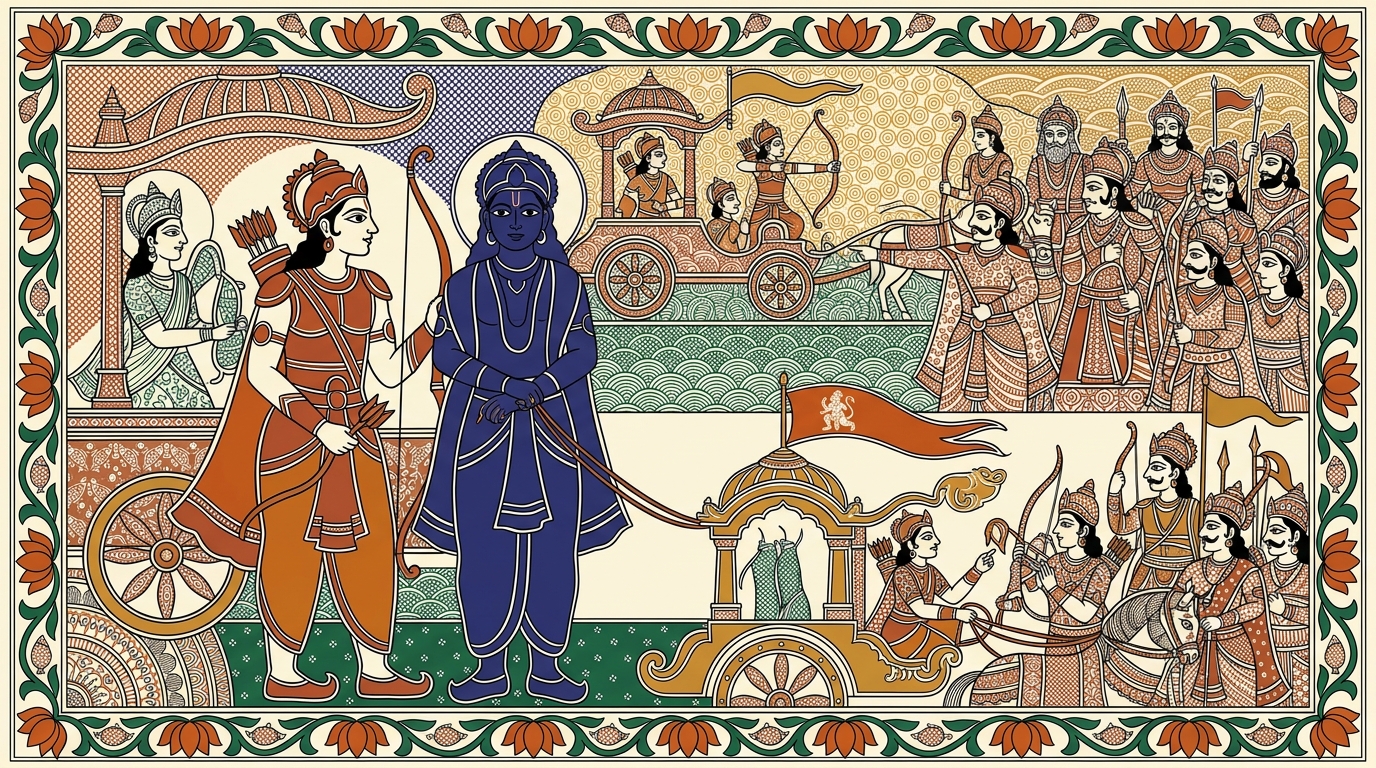
"Even if they kill me," Arjuna says. This is not weakness. It is a line drawn in the soul. There are people you
will not harm, no matter what they do to you — not for a kingdom,
not for the whole world, not for all three worlds stacked on top of
each other. Because some bonds are worth more than any prize, and
some violence would cost you something no victory could ever
replace.