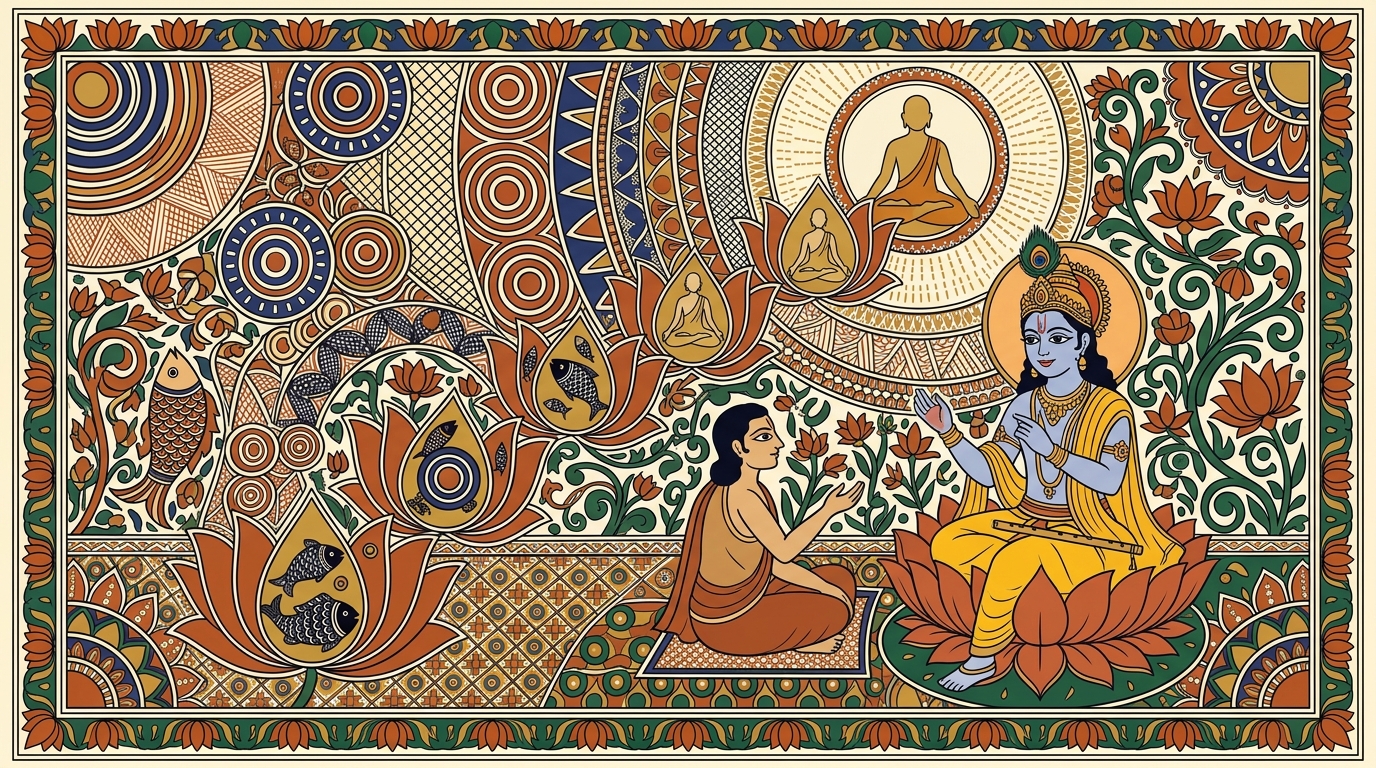
There is an old way of picturing a soul's long journey, and it goes like
this.
Imagine a single great mountain, taller than the clouds, with the highest
peak hidden in light. And imagine a pilgrim setting out to climb it — not in
one day, not in one life, but across many.
The first time, the pilgrim is new and stumbling. He climbs only a little
way up the foothills before his journey ends. He must rest. The sun sets on
that life.
But here is the secret of the mountain: when he sets out again, he does not
begin at the very bottom. He begins from where he stopped. Higher up now,
his legs a little stronger, his eyes a little surer of the path. He climbs
further this time before the light fades again.
And again he returns. And again he climbs from where he left off — past the
pine forests, past the cold streams, past the place where the trees give up
and only grey rock remains. Each journey he carries less and less in his
pack, because each journey he has learned to set down another heavy thing:
a grudge, a greed, a fear, a fault. He grows lighter. He grows cleaner. The
air grows thin and bright and pure.
At last, after more journeys than anyone could count, the pilgrim steps
out above the final ridge. There are no more faults left in his pack to set
down. There is nothing heavy in him at all. And before him, at the very top,
is the light that has been calling him the whole long way.
He walks into it. And the climbing is over, because there is nowhere higher
to go and nothing left to seek.
This, Krishna told Arjuna, is what happens to the patient seeker. Not in one
great leap, but step by step, life by life, fault by fault washed clean,
until at last he reaches the supreme goal — the peace at the top of the
mountain that was, all along, his true home.
"So do not fear for the one who tries," Krishna said. "He is only partway up.
And the mountain is patient."