On a feast day near the camp, a vendor sold balloons of bright dyed cloth,
blown full of warm air over a little brazier. They were the most beautiful
things a child had ever seen — round, glowing, lifting gently against their
strings.
A small boy named Pip begged for one until his aunt, a calm weaver named
Saroj, finally bought it for him. Pip was overjoyed. He ran across the
festival ground holding the string high, laughing, the balloon bobbing
above him like a captured piece of sunset.
But the warm air inside began to cool, the way warm air always does. Slowly
the balloon sagged. It drooped, wrinkled, and at last sank sadly into the
dust. Pip's face crumpled. He cried as if the whole festival had ended.
Saroj knelt beside him and wiped his cheeks. "Oh, Pip," she said softly,
"every balloon that goes up must come down. That is not the balloon being
cruel. That is just what balloons are. They have a moment when they fill,
and a moment when they empty. The going-up and the coming-down come in the
same package. You cannot buy one without the other."
Pip sniffled. "Then I shouldn't have wanted it?"
"You can enjoy it," Saroj said, smoothing his hair. "But don't hand it
your whole heart, little one, because then, when it sinks, your heart sinks
with it. Enjoy the balloon while it floats. Keep your happiness somewhere
steadier than the air inside a balloon."
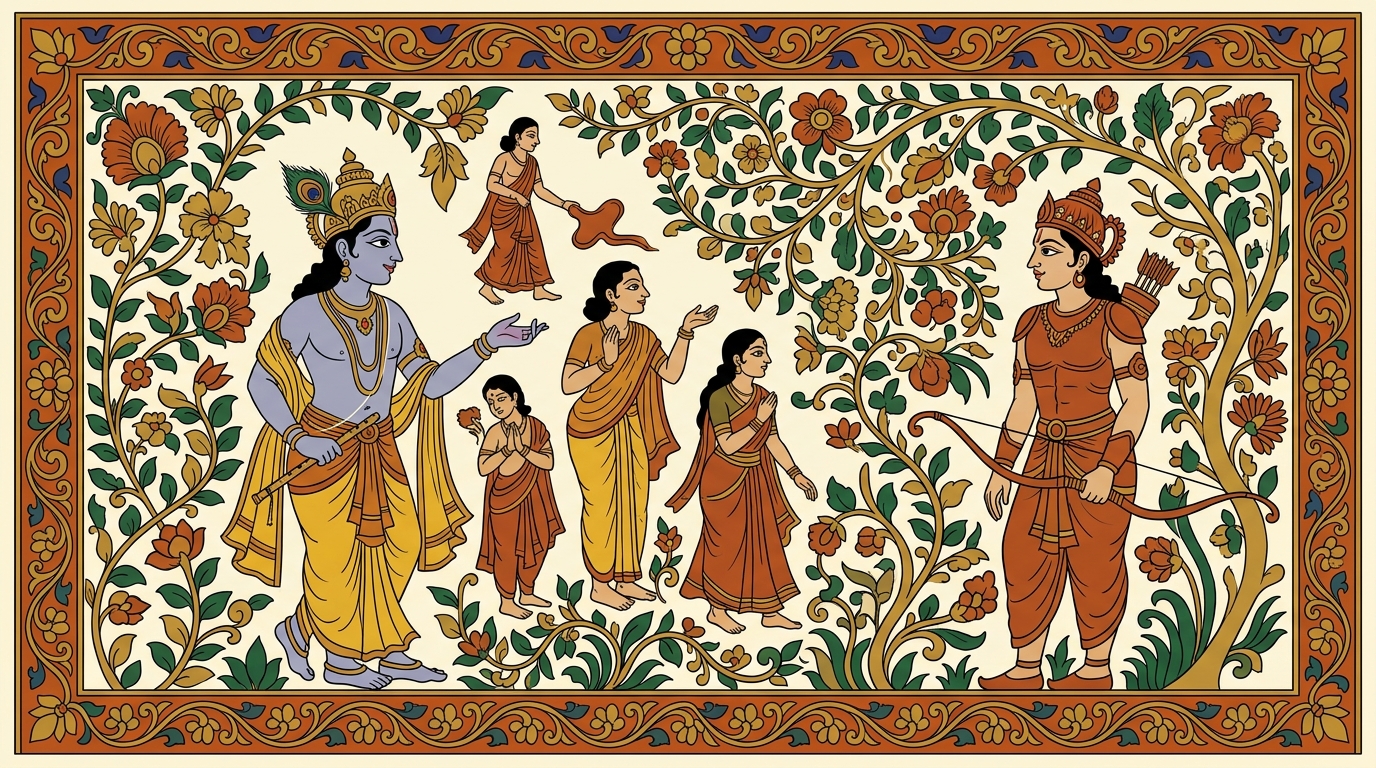
Far off in his chariot, Krishna was telling Arjuna the same kindness. "The
pleasures that come when the senses touch exciting things," he said, "are
wombs of pain. Every one of them has a beginning and an end, son of Kunti.
The wise enjoy them lightly, but they do not give such things their whole
delight, because what rises will fall."
Pip picked up the limp balloon, considered it for a moment, and then ran
off to play tag with the other children — laughing again, his happiness no
longer hanging by a single string.